
South Africa’s new Nationally Determined Contributions are delaying the Just Transition.
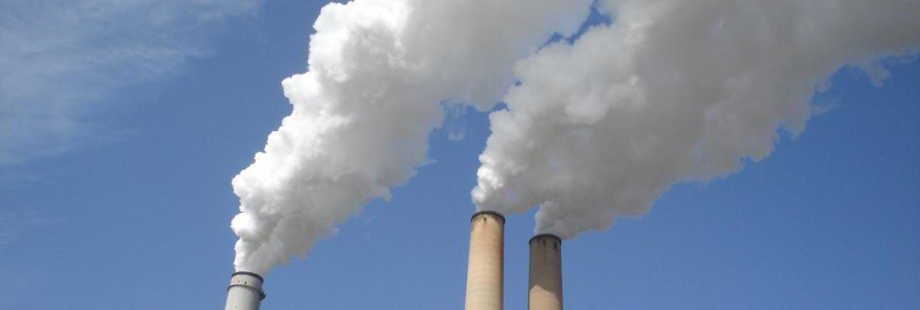
Government policies and processes fail to commit to decarbonization and building a climate resilient society by pushing for dirty fossil fuels that will accelerate climate change.
04 June 2021 - Organisations groundWork and Earthlife Africa (ELA) submitted comments on South Africa’s new Nationally Determined Contributions (NDCs) on 30th April 2021. And on 6th May 2021 community organisations Support Centre for Land Change (SCLC), Vukani Environmental Movement (VEM), Vaal Environmental Justice Alliance (VEJA) and South Durban Community Environmental Alliance (SDCEA) attended the Presidential Climate Commission for Climate Change (P4C) on the NDCs. Communities expressed their concern that Government – and the Department of Mineral Resources & Energy (DMRE) in particular – equates a just transition with a slow transition even as it promotes further fossil fuel developments at all costs.
The Paris Agreement aims to keep global warming to “well below 2°C” and preferably less than 1.5°C above pre-industrial temperatures. The Intergovernmental Panel on Climate Change has since made clear that 2° of warming will be disastrous and “rapid and far-reaching” changes to the economic system are needed to keep temperatures below 1.5°C – or even below 2°C.
To meet this target, global emissions must be reduced by half by 2030 and zero by 2050 and steeper reductions are needed to increase our odds of survival. However, the Paris Agreement relies exclusively on the combination of all the NDCs to meet the target and those submitted in the first round in 2015 added up to global warming of 4°C or more. The second round of NDCs is meant to ‘increase ambition’ but seems highly unlikely to keep us below 3°C, even if all countries do what they promise.
South Africa’s continued reliance on fossil fuels and delayed shift to renewable energy that is socially owned, will continue to make South Africa a pariah in climate justice circles. SA needs to take urgent action now by clearly defining what it is going to do to phase out fossil fuels, by when, and why this needs to occur.
President Cyril Ramaphosa says that the country's response to climate change will be guided by the Presidential Coordinating Commission on Climate Change. The Commission will work on a just transition to a low-carbon economy and a climate-resilient society, and ensure it is in consultation with the most vulnerable. The South African NDC statement says, “A just transition means leaving no-one behind”. But with no transition at all, and 60% of our country in poverty, people are already ‘left behind’. Poverty and inequality have increased since 1994. Consultation for the NDC has been limited.
Climate change will weigh most heavily on the poor and vulnerable, and so addressing challenges and emerging solutions - including adaptation and mitigation measures - should come from here to ensure environmental and social transformation.
The Department of Fisheries, Forestry and the Environment needs to recognise that government’s primary obligation is to its people and climate response including the NDC should come from a single process of deep and continuing engagement with people within an open democracy framework.
In response to the NDC processes, communities demand that urgent steps be taken to meet our climate targets and prevent an accelerated climate crisis:
- Stop ALL new fossil fuel exploration and extraction including coal, oil and gas developments.
- Decline existing oil and gas production by 2030.
- Stop investment in new coal, oil and gas infrastructure as it will lock us into GHGs and leave us with stranded assets.
- Reduce greenhouse gas (GHG) emissions to ZERO as soon as possible with a phase out plan aligned with 1.5oC.
- Recognise that South Africa’s ‘fair share’ is no more than 352 Mt CO2e in 2030. However, to meet the 1.5oC target, South Africa must reduce emissions to below 200 Mt by 2030. This is because the rich Northern countries have long since burnt through more than their fair shares. They therefore owe a climate debt to the people of the South and must cover the difference between the fair share and necessary reductions through financial and other transfers. We do not endorse the peak plateau and decline ‘range’ with upper and lower limits.
- Recognise that South Africa similarly owes a climate debt to the rest of Africa and that the rich in South Africa owe a climate debt to the poor.
- Stop relying on carbon sequestration and offsets. They are false solutions that allow polluting companies to continue polluting and they are expensive and require vast amounts of land that we do not have. It is better to leave the carbon in the ground and invest in clean energy technologies.
- Stop promoting the narrative of ‘clean coal’. It is an oxymoron.
- Stop saying that fossil gas is clean. It is dirty and dangerous. Methane gas and climate accelerating GHGs. ALL gas processes from extraction, distribution, processing and burning. Methane is under-reported and is 84x more powerful than carbon dioxide.
- Increase renewables to more than the DMRE’s determination of 6.8GW by 2024 and include socially owned renewable energy, not privatised energy.
- End all lobbying, policies, procurement, and adverts that obstruct climate solutions.
- Commit plans and funding to support energy worker’s transition into new sectors.
- Commit plans to clean energy production that is accessible and affordable, and which creates new jobs and supports local manufacture for a sustainable and just future for all.
“We call for acceleration of a just transition to a low carbon development to alleviate poverty and to avoid the climate catastrophic events which affects the marginalized communities” - Thabo Sibeko, Earthlife Africa
“The (rural) poor are already bearing the brunt of climate change. Women who traditionally sustained their livelihoods through small-scale production or fishing are increasingly crippled by the climate crisis and climate disasters. The impact of fossil fuel extraction on ecosystems and the availability of marine resources to sustain people is most notable. Putting food on the table and maintaining lives of dignity have become insurmountable hurdles.” – Chriszanne, Support Centre for Land Change #BanFracking
“South Africa’s new Nationally Determined Contributions are rejected by the vulnerable majority, who are constantly abused by governments' policies and processes. The system needs to be dismantled completely because it puts profits in the hands of a few beneficiaries and keeps the vast majority of people living in abject poverty. A just transition must be inclusive and people-centered” – Shanice Firmin, SDCEA
“We really do not need any new coal or any fossil fuels. Enough is enough. As women, we are suffering the consequences of coal on our health and the environment. We need a new energy system based on socially owned renewables with jobs in manufacturing, as well as construction, operations and maintenance.” – Promise Mabilo #CancelCoal, Vukani Environmental Movement
“We need a faster transition to renewable energy and to stop all new fossil fuel developments. History will repeat its injustices of environmental racism, pollution of our water, land and air and impoverishment associated with fossil fuels. People’s suffering will be intensified with climate change impacts. We cannot afford to lock ourselves into more fossil fuels. It is a death sentence for people, planet and the economy”. – Avena Jacklin, groundWork
Resources:
groundwork comment on NDC and consultation process.
DW.com - 1.5oC goal etremely unlikely, IPCCC.
UNFCC - Climate Committment not on track to meet Paris agreement goals.
Daily Maverick - It's the Green Train now and you're on the wrong platform Gwede Mantashe.
Daily Maverick - Deadly Air - A case about real lives and real people.
For Media enquiries:
- Tsepang Molefe
Media and Communications, groundWork - media@groundwork.org.za - Thabo Sibeko
Programs and Education Officer, Earthlife Africa (ELA) -thabos@earthlife.org - Chriszanne Janse van Vuuren
Programme Manager, #BanFracking / Support Centre for Land Change (SCLC) - chriszanne@sclc.co.za, - Promise Mabilo
#CancelCoal / Vukani Environmental Movement (VEM) - mabilopromise@gmail.com - Shanice Firmin
Development, Infrastructure and Climate Change, SDCEA - shanice@sdceango.co.za - Avena Jacklin
Climate and Energy Justice, groundWork/Friends of the Earth, South Africa - avena@groundwork.org.za